| Chaudhari, N., Talwar, P., Parimisetty, A., & others. (2014). A Molecular Web: Endoplasmic Reticulum Stress, Inflammation, and Oxidative Stress. Front. Cell. Neurosci. 8. |
 
|
| Last edited by: Dr. Enrique Feoli 27/02/2021, 18:26 |
|
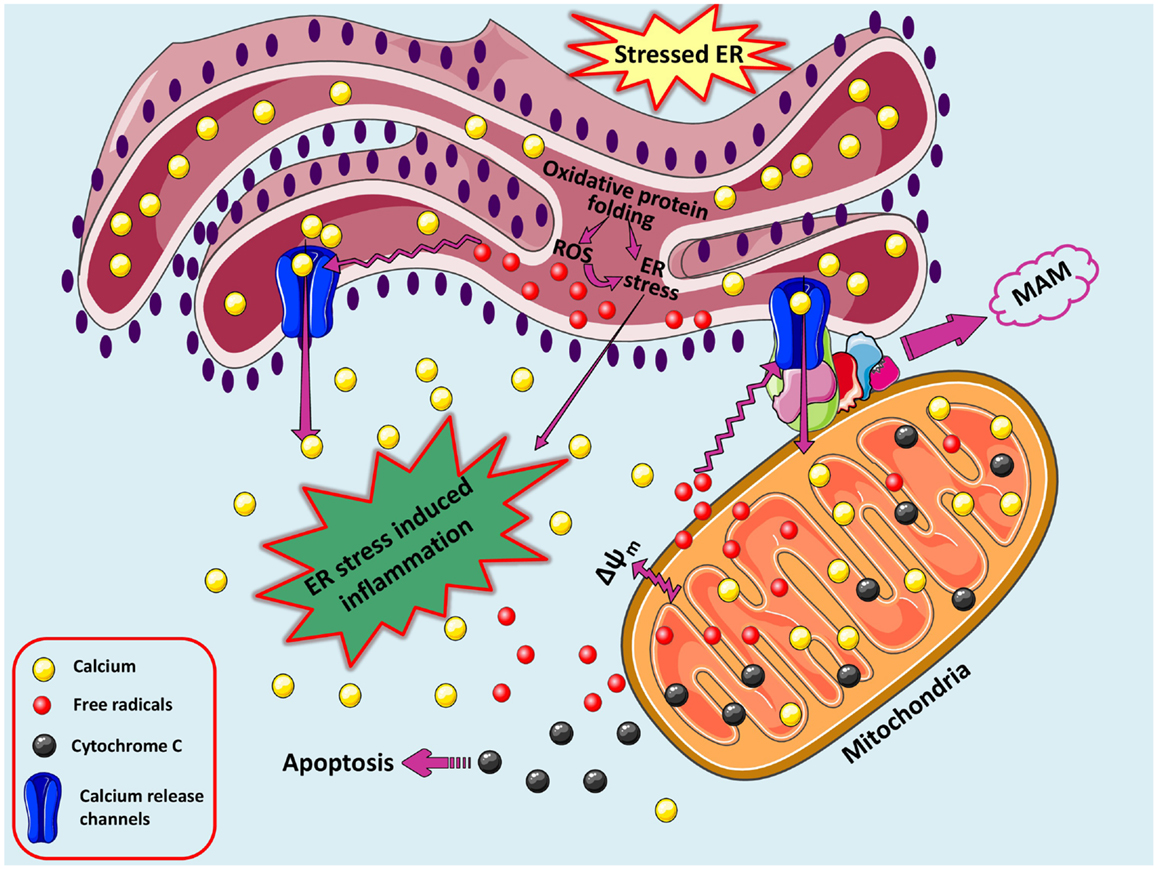 A loop of oxidative stress, ER stress leading to inflammation. During protein overload, ROS are generated in the ER as a part of an oxidative folding process during electron transfer between protein disulfide isomerase (PDI) and endoplasmic reticulum oxidoreductin-1 (ERO-1). ROS can target ER resident proteins, enzymes, and chaperones (not shown) and ER based calcium (Ca2+) channels, leading to the release of calcium from the ER into the cytosol and ER-stress signaling. Increased cytosolic calcium and calcium entry in mitochondria from ER via MAM-associated channels can stimulate mitochondria metabolism to produce more ROS. Increased mitochondrial calcium concentration causes cytochrome c release, altered membrane potential that eventually triggers cellular death programs. The increased protein folding demand, calcium and ROS signaling integrates with UPR pathways and can potentially lead to inflammatory responses. A loop of oxidative stress, ER stress leading to inflammation. During protein overload, ROS are generated in the ER as a part of an oxidative folding process during electron transfer between protein disulfide isomerase (PDI) and endoplasmic reticulum oxidoreductin-1 (ERO-1). ROS can target ER resident proteins, enzymes, and chaperones (not shown) and ER based calcium (Ca2+) channels, leading to the release of calcium from the ER into the cytosol and ER-stress signaling. Increased cytosolic calcium and calcium entry in mitochondria from ER via MAM-associated channels can stimulate mitochondria metabolism to produce more ROS. Increased mitochondrial calcium concentration causes cytochrome c release, altered membrane potential that eventually triggers cellular death programs. The increased protein folding demand, calcium and ROS signaling integrates with UPR pathways and can potentially lead to inflammatory responses. |


