BioAcyl Corp

BioAcyl Corp |
|
 |
 |
 |

|
Fullerton, J. N., & Gilroy, D. W. (2016). Resolution of inflammation: a new therapeutic frontier. Nat. Rev. Drug Discovery, 15(8), 551–567. Added by: Dr. Enrique Feoli (19/02/2021, 00:43) Last edited by: Dr. Enrique Feoli (19/02/2021, 00:48) |
 |
| Resource type: Journal Article Published DOI: 10.1038/nrd.2016.39 ID no. (ISBN etc.): 1474-1784 BibTeX citation key: Fullerton2016 View all bibliographic details  |
Categories: BioAcyl Corp Subcategories: Inflammation resolution Creators: Fullerton, Gilroy Collection: Nat. Rev. Drug Discovery |
Views: 23/328
|
| Abstract |
|
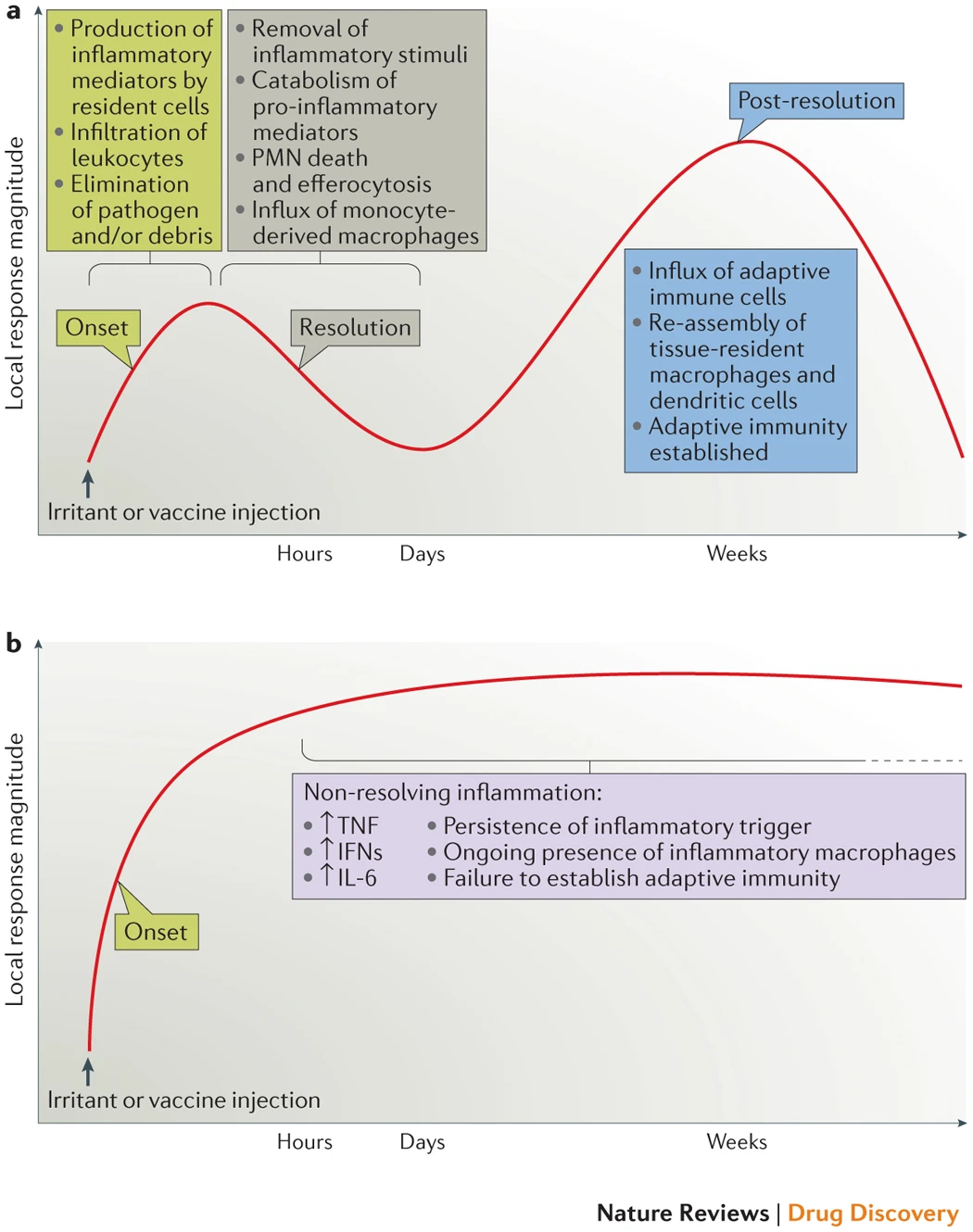
Inflammation is a beneficial process, designed to contain and eradicate threats to the host organism. Dysregulation of the magnitude or duration of inflammation contributes to multiple pathologies. Traditionally, drugs have been designed to reduce inflammation. Some such approaches {ifmmode---elsetextemdashfi} for example, non-steroidal anti-inflammatory drugs or pro-inflammatory cytokine ablation {ifmmode---elsetextemdashfi} achieve this by targeting factors that drive inflammation; others {ifmmode---elsetextemdashfi} for example, glucocorticoids {ifmmode---elsetextemdashfi} are directly anti-inflammatory. Active, specialized pathways bring about the resolution of inflammation. These involve discrete mediators and distinct cell phenotypes that act in a non-phlogistic manner to promote the clearance of inflammatory cells and a return to local tissue homeostasis. Recent advances in our understanding of the central processes in the resolution of inflammation {ifmmode---elsetextemdashfi} including pro-inflammatory mediator catabolism, dampening of downstream signalling, apoptosis and efferocytosis of inflammatory cells and their regulation {ifmmode---elsetextemdashfi} permit targeted pharmacological interventions to promote inflammatory resolution. The development of drugs that promote or mimic the mode of action of endogenous pro-resolution pathways may afford a novel complementary, or potentially superior, strategy to traditional options {ifmmode---elsetextemdashfi} thus regulating inflammation and restoring function, not merely suppressing inflammation. Recent discoveries suggest that the innate immune response, and in particular its resolution, may modulate the subsequent development of adaptive immunity and so may afford further therapeutic targets. Multiple challenges remain in developing human models of inflammatory resolution and in translating murine discoveries to date into drugs for humans.
|
| Notes |
Added by: Dr. Enrique Feoli Last edited by: Dr. Enrique Feoli |